Mostrando entradas con la etiqueta madrid. Mostrar todas las entradas

domingo, 26 de abril de 2026

198 - #FOTOGRAFIA - #ESCULTURA: ME CAGO EN CARLOS III por Dosmilcien + #PHOTOGRAPHY - #SCULPTURE: I DON'T GIVE A SHIT ABOUT CHARLES III by Dosmilcien + #PHOTOGRAPHIE - #SCULPTURE : JE ME CHIE SUR CHARLES III par Dosmilcien +#摄影 - #雕塑:去他的卡洛斯三世 —— Dosmilcien 著


El título de este post es la expresión literal de lo que siento ante el llamado "mejor alcalde de Madrid"; en este escenario, yo bien podría ser la paloma. Nos encontramos ante una obra de teatro de plano único e inerte donde la trama parece congelada, aunque todos conozcamos de sobra su desenlace.

Es una acción libertaria e insurgente que busca, en esencia, subvertir el poder establecido para, al menos, vislumbrar una alternativa. Esta imagen funciona como una proclama política atemporal, un eco que resuena en cualquier capítulo de nuestra historia. No es una provocación personal: es la propia naturaleza la que dicta sentencia. Ella, que es sabia, siempre termina reclamando los espacios conquistados por reyes y populacho, por militares de bigote ancho o por muertos de hambre.

Estamos ante arte político en estado puro. Esa "coma" orgánica que se posa sobre la cabeza real no es otra cosa que un acto de justicia social, urgente y necesaria.

Aunque la escultura respira un aire de posteridad, es plenamente contemporánea: fue fundida en 1994 por Miguel Ángel Rodríguez y Eduardo Zancada. Su pedestal, grabado con un texto cuya lectura desafía al paseante, es obra de José María Guijarro. Sin embargo, este bronce moderno oculta un origen académico; se basa en un modelo de yeso custodiado en la Real Academia de Bellas Artes de San Fernando, el templo del "buen gusto" por el que desfilaron tantos artistas antes de consagrarse como maestros del canon universal.


The title of this post is the literal expression of how I feel before the so-called "best mayor of Madrid"; in this scenario, I might as well be the pigeon. We find ourselves before a one-act, inert play where the plot seems frozen, even though we all know the ending only too well.

It is a libertarian and insurgent act that seeks, in essence, to subvert established power to at least catch a glimpse of an alternative. This image functions as a timeless political proclamation, an echo that resonates in any chapter of our history. It is not a personal provocation: it is nature itself passing judgment. Nature, in its wisdom, always ends up reclaiming the spaces conquered by kings and commoners, by thick-mustachioed soldiers or by those starving to death.

This is political art in its purest form. That organic "comma" perched upon the royal head is nothing less than an act of social justice—urgent and necessary.

Although the sculpture breathes an air of posterity, it is entirely contemporary: it was cast in 1994 by Miguel Ángel Rodríguez and Eduardo Zancada. Its pedestal, engraved with a text that defies the passerby’s gaze, is the work of José María Guijarro. However, this modern bronze hides an academic origin; it is based on a plaster model kept at the Real Academia de Bellas Artes de San Fernando—that temple of "good taste" through which so many artists passed before enshrining themselves as masters of the universal canon.


Le titre de ce billet est l'expression littérale de ce que je ressens face à celui qu'on appelle « le meilleur maire de Madrid » ; dans ce scénario, je pourrais bien être le pigeon. Nous sommes face à une pièce de théâtre au plan unique et inerte où l'intrigue semble figée, bien que nous en connaissions tous l'issue par cœur.

C'est une action libertaire et insurgée qui cherche, par essence, à subvertir le pouvoir établi pour, au moins, entrevoir une alternative. Cette image fonctionne comme une proclamation politique intemporelle, un écho qui résonne dans n'importe quel chapitre de notre histoire. Ce n'est pas une provocation personnelle : c'est la nature elle-même qui rend son verdict. Elle qui est sage finit toujours par réclamer les espaces conquis par les rois et le peuple, par les militaires aux moustaches épaisses ou par les crève-la-faim.

Nous sommes devant de l'art politique à l'état pur. Cette « virgule » organique qui se pose sur la tête royale n'est rien d'autre qu'un acte de justice sociale, urgent et nécessaire.

Bien que la sculpture respire un air de postérité, elle est pleinement contemporaine : elle a été fondue en 1994 par Miguel Ángel Rodríguez et Eduardo Zancada. Son piédestal, gravé d'un texte dont la lecture défie le passant, est l'œuvre de José María Guijarro. Cependant, ce bronze moderne cache une origine académique ; il repose sur un modèle en plâtre conservé à l'Académie Royale des Beaux-Arts de San Fernando, ce temple du « bon goût » où tant d'artistes ont défilé avant de se consacrer comme maîtres du canon universel.


这篇文章的标题正是我面对这位所谓的“马德里最佳市长”时内心感受的真实写照;在这一情境下,我也许就是那只鸽子。我们正面对着一场单一平面且毫无生气的戏剧,剧情仿佛凝固,尽管我们对结局早已了然于胸。

这是一种自由意志主义与反叛的行动,其本质旨在颠覆既定权力,以求至少能窥见一种替代的可能性。这一画面如同一篇超越时空的政治宣言,在历史的任何篇章中都能引起回响。这并非个人挑衅,而是自然本身在做出裁决。充满智慧的自然,终将收回那些被国王与平民、大胡子军人或饥民所征服的空间。

这是纯粹的政治艺术。那枚落在皇室头顶的有机“逗号”,正是迫切且必要的社会公正行为。

尽管这座雕塑散发着传世的气息,但它完全是当代作品:由米格尔·安赫尔·罗德里格斯和爱德华多·桑卡达于1994年铸造。其基座上刻有让行人难以辨认的文字,出自何塞·玛丽亚·吉哈罗之手。然而,这件现代青铜作品隐藏着学术渊源;它基于圣费尔南多皇家美术学院馆藏的一件石膏模型,那是众位艺术家在成为普世经典大师之前必经的“高雅品味”殿堂。


Dosmilcien, @dosmilcien.bsky.social

@iarte.bsky.social

domingo, 5 de octubre de 2025

NOVELA GRÁFICA - EL MAPA DE CHILLIDA POR DAVID MARTOS + GRAPHIC NOVEL - THE MAP OF CHILLIDA BY DAVID MARTOS


Me fascina la novela gráfica por su poder para dibujar absolutamente todo. Es la sencillez de sus obras, y sobre todo, la capacidad de ver el mundo a través de la lente de un lapicero y un cuaderno de dibujo.

Para mí, una de las obras de Chillida que más me conmueve es la que se suspende por cables de acero en pleno Paseo de la Castellana de Madrid. Me impresiona profundamente, porque es la esencia misma del artista: reflexión y paz a la vez.

Pero volvamos a la obra gráfica. Tres colores como método de expresión: azul, negro y blanco, que otorgan una profundidad asombrosa a la pieza. Todo es limpio, libre de elementos superfluos; solo la obra de Chillida y, como invitados, aquellos que la observan en un silencio sepulcral, casi reverencial. Es un lugar sagrado. Más adelante, en la misma página, aparece un edificio icónico de la capital, el edificio Carrión, iluminado por el neón de Schweppes. Muestra un Madrid solitario, algo insólito en una ciudad siempre saturada, en una noche tranquila donde todo puede pasar... o nada en absoluto.

¿Acaso esta obra nos hace viajar a otros mundos, ya sean futuros o pasados? Es posible. ¿Nos ofrece sosiego y reflexión, enlazando directamente con el espíritu de Chillida? Estoy seguro de que sí. O tal vez, simplemente, David Martos ha caído rendido ante las redes del genio vasco, cautivado por una atracción de la que ya no puede escapar.


I am fascinated by the graphic novel for its power to illustrate absolutely everything. It's the simplicity of its works, and above all, the ability to see the world through the lens of a pencil and a sketchbook.

For me, one of Chillida's works that moves me most deeply is the one suspended by steel cables in the middle of Madrid's Paseo de la Castellana. It impresses me profoundly, because it is the very essence of the artist: reflection and peace at the same time.

But let's go back to the graphic work. Three colors as a method of expression: blue, black, and white, which give the piece an astonishing depth. Everything is clean, free of superfluous elements; only Chillida's work and, as guests, those who observe it in a sepulchral, almost reverential silence. It's a sacred place. Further on, on the same page, an iconic building of the capital appears, the Carrión building, lit by the Schweppes neon sign. It shows a lonely Madrid, something unusual in a city that is always saturated, on a quiet night where anything can happen... or nothing at all.

Does this work make us travel to other worlds, whether future or past? It's possible. Does it offer us calm and reflection, linking directly with the spirit of Chillida? I'm sure it does. Or perhaps, quite simply, David Martos has succumbed to the spell of the Basque genius, captivated by an attraction from which he can no longer escape.


Dosmilcien

@dosmilcien.bsky.social

@iarte.bsky.social

domingo, 31 de agosto de 2025

#URBANISMO - CIUDAD PEGASO DE MADRID + #URBANISM - MADRID'S CIUDAD PEGASO


El urbanismo es, sin duda, un campo fascinante. No solo por el ingenio del diseño que implica, sino porque cada desarrollo urbano es, en esencia, un experimento sociopolítico que moldea directamente la vida de las personas.


Un Paseo por el Urbanismo Franquista

España ofrece numerosos ejemplos de esto. Un caso paradigmático es el Plan Badajoz, que no solo transformó el paisaje con sus regadíos, sino que también vio nacer pueblos de nuevo cuño. Estas creaciones urbanísticas surgieron al amparo de la política de autarquía implementada durante los oscuros años del franquismo buscando la autosuficiencia económica del país.


Ciudad Pegaso: Un ejemplo emblemático

De ese "nuevo urbanismo del imperio", Ciudad Pegaso en Madrid se erige como el mejor ejemplo. Esta miniciudad fue meticulosamente planificada en torno a la fábrica de camiones Pegaso. Dicha fábrica era propiedad de ENASA (Empresa Nacional de Autocamiones S.A.), una entidad vinculada al tristemente desaparecido INI (Instituto Nacional de Industria).

Este barrio fue concebido como una comunidad autosuficiente, equipada con todo lo necesario: desde colegio, iglesia y economatos (¡un gran invento social!), hasta campos deportivos, diversos tipos de viviendas y cines, entre un largo etcétera de servicios. La idea subyacente era que el obrero de la fábrica no necesitara salir del barrio ni, lo que es crucial, relacionarse con trabajadores de otras fábricas. De esta manera, los jerarcas del franquismo pretendían romper con el principio marxista de la unidad de la clase obrera.


Diseño y Estratificación Social

Esta magna obra, que considero otro gran invento urbanístico, fue diseñada en la década de los 50 por los arquitectos Francisco Bellosillo García y Juan Bautista Esquer de la Torre. Su diseño, especialmente en la zona residencial, refleja claramente la estratificación social y profesional de los trabajadores de la fábrica. Así, encontramos viviendas unifamiliares más grandes para ingenieros y directivos, contrastando con los pisos destinados a las categorías laborales más bajas.


Una Visita Imprescindible

Si te apasiona la historia y el urbanismo, Ciudad Pegaso es un lugar que merece la pena visitar. Se encuentra al final de la calle Alcalá, en el distrito madrileño de San Blas-Canillejas, lindando con la autovía A-2.


A Walk Through Francoist Urbanism

Spain offers numerous examples of this. A prime case is the Badajoz Plan, which not only transformed the landscape with its irrigation systems but also saw the birth of newly established towns. These urban creations emerged under the umbrella of the autarky policy implemented during the dark years of Francoism, aiming for the country's economic self-sufficiency.


Ciudad Pegaso: An Emblematic Example

Of that "new urbanism of the empire," Ciudad Pegaso in Madrid stands as the best example. This mini-city was meticulously planned around the Pegaso truck factory. This factory was owned by ENASA (Empresa Nacional de Autocamiones S.A.), an entity linked to the sadly defunct INI (Instituto Nacional de Industria).

This neighborhood was conceived as a self-sufficient community, equipped with everything necessary: from a school, church, and company stores (a great social invention!), to sports fields, various types of housing, and cinemas, among a long list of services. The underlying idea was that the factory worker wouldn't need to leave the neighborhood, nor—and this is crucial—interact with workers from other factories. In this way, the Francoist leaders aimed to break the Marxist principle of working-class unity.


Design and Social Stratification

This magnificent work, which I consider another great urbanistic invention, was designed in the 1950s by architects Francisco Bellosillo García and Juan Bautista Esquer de la Torre. Its design, especially in the residential area, clearly reflects the social and professional stratification of the factory workers. Thus, we find larger single-family homes for engineers and executives, contrasting with the apartments intended for lower-ranking labor categories.


A Must-Visit

If you're passionate about history and urbanism, Ciudad Pegaso is a place worth visiting. It's located at the end of Calle Alcalá, in Madrid's San Blas-Canillejas district, bordering the A-2 highway.


Dosmilcien

@dosmilcien.bsky.social

@iarte.bsky.social


domingo, 29 de junio de 2025

149 - #ARQUITECTURA - REAL CASA DE LA MONEDA DE MADRID (1964) + ARCHITECTURE - ROYAL MINT OF MADRID (1964)


  En el corazón de Madrid se alza la actual Real Casa de la Moneda, un edificio que cautiva por su belleza funcional y la rotunda sencillez de sus líneas. Es un arquetipo de la arquitectura industrial, una especie en extinción en el paisaje urbano de la capital, que cede terreno ante un futuro aún por definir. 

Fruto del trabajo de varios arquitectos, su razón de ser es tan crucial como su estética: la acuñación de monedas y billetes de curso legal, además de la invaluable tarea de preservar antiguas colecciones numismáticas. Su estilo, anclado en el racionalismo, abraza la funcionalidad por encima de todo. Cada elemento, básico y sin adornos, revela una armonía intrínseca, donde la ornamentación carece de sentido. Este es un edificio donde la precisión se manifiesta en cada rincón, y su presencia susurra una melodía monocorde de propósito y diseño.


In the heart of Madrid stands the current Royal Mint (Real Casa de la Moneda), a building that captivates with its functional beauty and the striking simplicity of its lines. It's an archetype of industrial architecture, a vanishing species in the capital's urban landscape, yielding ground to a future yet to be defined.

The result of the work of several architects, its purpose is as crucial as its aesthetics: the minting of legal tender coins and banknotes, in addition to the invaluable task of preserving ancient numismatic collections. Its style, rooted in rationalism, embraces functionality above all else. Every element, basic and unadorned, reveals an intrinsic harmony where ornamentation is meaningless. This is a building where precision is evident in every corner, and its presence whispers a single-toned melody of purpose and design.


Dosmilcien

@dosmilcien.bskay.social

domingo, 15 de junio de 2025

#FOTOGRAFÍA - DESDE EL PIRULÍ SE VE UN PAÍS + #PHOTOGRAPHY - FROM THE PIRULÍ YOU CAN SEE A COUNTRY


Una antigua canción de Víctor Manuel decía: "Desde el Pirulí se ve un país confundido y feliz de perfil" y ponía frente al espejo a los españolitos (que ven la tele – canción también) de este país llamado España. 
Como dato, esta infraestructura de telecomunicaciones, radio y televisión, está situada en Madrid y ahí se encuentran los servicios informativos de TVE. Y también como dato curioso, su diseño fue obra de mi tío, que trabajaba en esa época en lo que se conocía como Red de RTVE, que es el departamento que se encargaba de todo el diseño de las antenas y edificios de la radio y televisión pública.

You're right, there was a slight typo in my previous response. Here's the corrected English translation:

An old song by Víctor Manuel said: "From the Pirulí you can see a country confused and happily in profile" and held up a mirror to the "españolitos" (little Spaniards who watch TV – also a song) of this country called Spain. As a piece of information, this telecommunications, radio, and television infrastructure is located in Madrid, and that's where the news services of TVE are found. And also as a curious fact, its design was the work of my uncle, who worked at that time in what was known as Red de RTVE, which is the department that was in charge of all the design of the antennas and buildings of public radio and television.


Dosmilcien

@dosmilcien.bsky.social

domingo, 14 de julio de 2024

#DIBUJO / FACULTAD DE DERECHO DE LA UNIVERSIDAD AUTÓNOMA DE MADRID - Antonio Fernández Alba


Este es el boceto que el arquitecto Antonio Fernández Alba realizó para la progresista en su época Universidad Autónoma de Madrid. La construcción según he mirado no se llevó a cabo pero nos queda el bonito diseño de las manos de este arquitecto. Del edificio se podría destacar ese rosetón, o neo rosetón para ser exactos, de líneas rectas y ángulos también rectos  que  en su fachada sería un gran sumidero de luz que inundarían sus salas interiores. Podría decirse que es un homenaje moderno al gótico y la apertura a la luz de los templos del pasado.  

La luz es fe y es conocimiento. 


This is the sketch that the architect Antonio Fernández Alba made for the progressive Autonomous University of Madrid at the time. The construction, as I have seen, was not carried out but we are left with the beautiful design of the hands of this architect. Of the building, one could highlight that rose window, or neo rose window to be exact, with straight lines and right angles that on its façade would be a large sink of light that would flood its interior rooms. It could be said that it is a modern tribute to the Gothic and the opening to the light of the temples of the past. Light is faith and it is knowledge.


Dosmilcien

@Dosmilcien_2100

viernes, 5 de julio de 2024

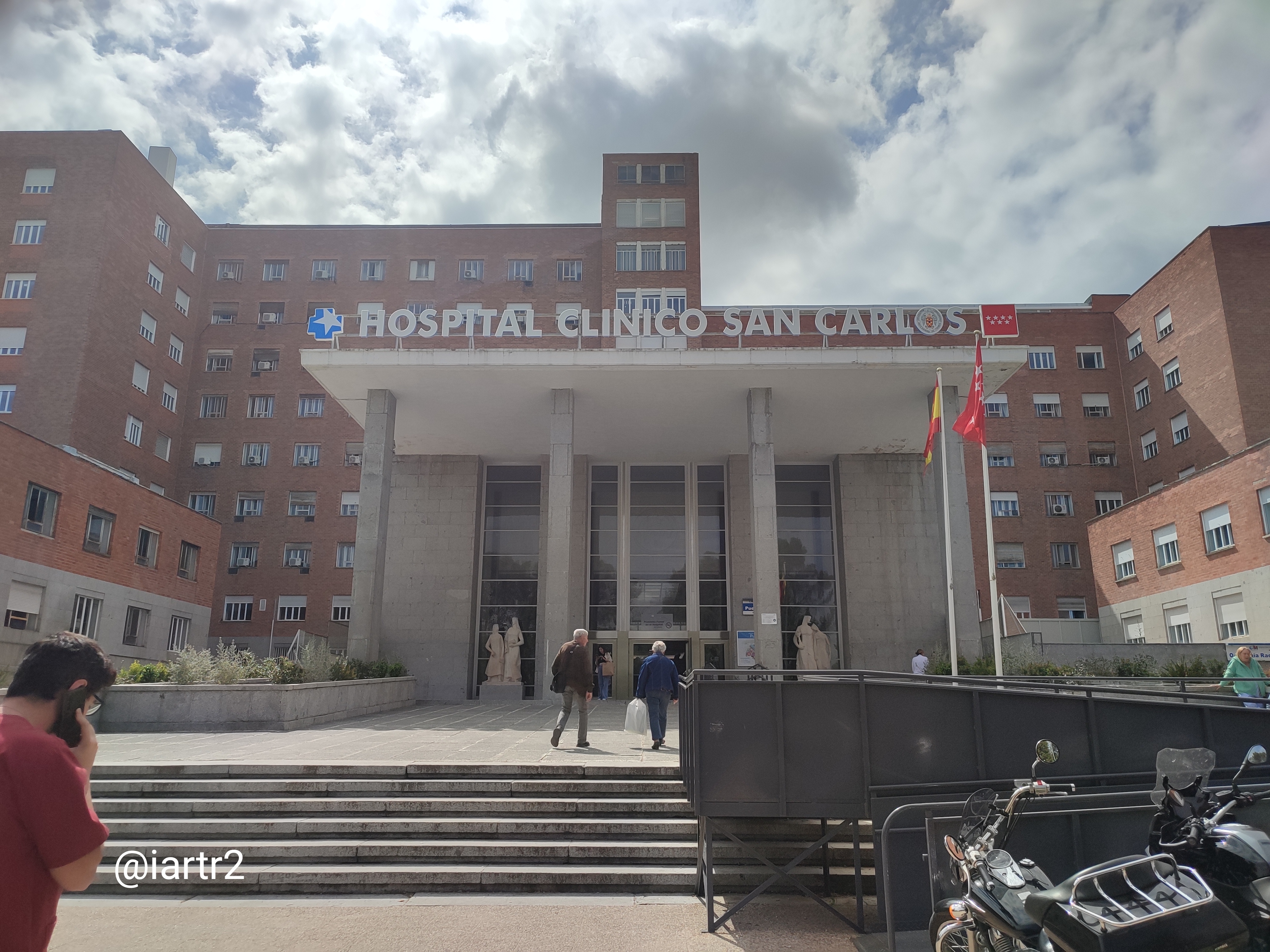
67 - TEMPLO


El edificio del Hospital Clínico San Carlos de Madrid es la historia de un edificio de enfrentamiento. Fue casi terminado antes de la Guerra Civil Española y destruido durante esta. Se llega a decir que en el frente de la Ciudad Universitaria había plantas que pertenecían al bando republicano y otras al bando fascista llegando a producirse fuertes enfrentamientos entre planta y planta. Si uno conoce la zona el tramo que va desde este Hospital a Instituto Anatómico Forense está lleno de trincheras. 

Un vez dicho esto lo que sí es el Hospital Clínico es un templo ciencia. Un templo de la religión médica donde se cura, la mayoría de las veces, y donde se muere con dignidad. Allí se investiga, se humaniza la desgracia, donde uno puede encontrar una sonrisa ante una noticia inesperada. Por lo tanto también es un templo a la humanidad donde no se juega a ser Dios sino donde Dios ha puesto el conocimiento en el hombre para salvar vidas, para tener consuelo (dualidad entre ateísmo y religión). 

En consecuencia este edificio donde se acumuló muerte, destrucción y odio (fascista) es hoy un edificio de concordia y de humanidad. No puede haber mejor homenaje a todos un cada uno de nosotros los que formamos este planeta. 


The building of the San Carlos Clinical Hospital in Madrid is the story of a building of confrontation. It was almost completed before the Spanish Civil War and destroyed during it. It is said that in front of the University City there were plants that belonged to the Republican side and others to the fascist side, leading to strong confrontations between plants. If you know the area, the stretch that goes from this Hospital to the Forensic Anatomical Institute is full of trenches.


Having said this, what the Clinical Hospital is is a temple of science. A temple of medical religion where people are cured, most of the time, and where they die with dignity. There it is investigated, misfortune is humanized, where one can find a smile in the face of unexpected news. Therefore it is also a temple to humanity where one does not play at being God but where God has placed knowledge in man to save lives, to have consolation (duality between atheism and religion).


Consequently, this building where death, destruction and (fascist) hatred accumulated is today a building of harmony and humanity. There cannot be a better tribute to each of us who make up this planet.

Dosmilcien

@Dosmilcien_2100

lunes, 18 de mayo de 2020

#Fotografía #Madrid: 1164 - la herencia

@Gropiun1

La abuela murió con 97 años acompañada de sus hijos e hijas, los que les quedaba de 5, y de los nietos muchos de los cuales no habían visto morir nunca a nadie y menos a un ser querido. La herencia a repartir sería cuantiosa pero la joya de la corona de toda ella era un gran piso en Madrid por la que seguramente habría sus más y sus menos entre los herederos directos. Mis tíos unos adinerados y otros simples trabajadores sin pena ni gloria, estaban expectantes hasta que el jueves por la tarde se abriera ante notario su testamento, pero los que más deseaban esa tarta del pastel eran precisamente los que más dinero atesoraban en sus cuentas corrientes o en sus acciones del IBEX-35, lo otros, los trabajadores, solo esperaban el premio para salir de alguna manera de sus apretadas vidas. 
Y ocurrió, ese jueves, ese fatídico jueves, ante el escenario de una notaría, con su rigurosa seriedad y su olor a naftalina donde se puso en conocimiento el reparto del dinero de la abuela y de sus escasas propiedades. Y la verdad es que fue fácil; el dinero se repartió a partes iguales después de restar los gastos del sepelio y del papeleo, y el piso, el piso por los que todos estaban en un sin vivir quedo en tierra de nadie ya que no se mencionaba en la herencia de mi abuela. Según el notario con ese aire a homilía en   misa de la tarde en la catedral, fue vendido hace años "en el mercado libre" sacando una buena tajada de capital que la abuela, la dulce, culta, y buena abuela, cedió gustosamente el capital a aquellas personas que tenían menos dinero que las ambiciosos hijos e hijas y que llegaban a cientos jugándose la vida en el Mediterráneo huyendo de las guerras y que a pesar de todo seguían siendo personas más dignas que todos sus hijos e hijas juntos.  

Gropium

lunes, 20 de enero de 2020

#fotogrfía #Madrid: 1149 - Plaza de Santa Cruz esquina con Calle de Zaragoza

@Gropium1
Andando por Madrid entre la Plaza de Santa Cruz, esquina con la Calle Zaragoza, en una fría noche de invierno, con algo de prisa claro, gracias al rigor climatológico de la capital del reino, me encontré con Quevedo, asi como de sopetón ya que mis ojos iban clavados en mi nuevo móvil y necesitaba, porque ya es una necesidad, ponerme al día con mi vida social en el mundo digital. 

-Perdone usted gentilhombre casi me atropella- me espetó el malas pulgas de Quevedo.


-Disculpe, iba absorto en mi móvil- al levantar de cabeza y darme cuenta que era Quevedo por la imágenes por mi vistas en internet, casi me entra una contradicción espacio-tiempo, siendo como es esto muy grave ya que lo mismo la lio y no he nacido.  


-Esas maquinas infernales van a terminar con la civilización occidental joven, atrás se quedarán para el recuerdo la literatura, la escritura y la lectura, y cuando ustedes se den cuentan será demasiado tarde. Por ejemplo yo, que en un futuro no muy lejano solo seré una reseña en la Wikipedia.-


Balbuceando le pude llegar a decir: - este es el signo de nuestro tiempo, ya no hay plumas para escribir, ni tinta para marcar las hojas en blanco. Ahora tenemos un archivo en blanco que hay que rellenar, a una mayor velocidad, eso sí, y se asemeja a lo que usted hacía.-


-Cállese mentecato- me digo con muy malas pulgas porque era un hombre de mala pulgas. -vuestras mercedes no llegarán ni a la altura de la hebilla de mi zapato de charol porque son unos burros de armas tomar.-

Dicho esto desenvainó su espada y me asesto una estocada en mi Huawei nuevo que me destrozo la carcasa y su flamante estampa de una playa de Jamaica. 
Al romper mi recién adquirido móvil la sombra y el semblante de Quevedo se desvaneció.


Me incorporé de la cama sobresaltado ya que perder un móvil en la era que nos ha tocado vivir es igual que perder los dos brazos.  Afortunadamente todo fue un sueño digital del buscador Google con el patrocinio de Trivago. 
Se lo haré saber por la mañana en sugerencias en cuantito me conecte a ver como cada día mi actividad social (digital)


Walking through Madrid between the Plaza de Santa Cruz, corner with Calle Zaragoza, on a cold winter night, with some clear haste, thanks to the weather rigor of the capital of the kingdom, I met Quevedo, as well as a sopeon as my eyes were nailed to my new m because it is already a necessity, to catch up with my social life in the digital world.
"Excuse me, you gentle man almost ran me over, " I was spewed by the bad fleas of Quevedo.
"Excuse me, I was absorbed in my mobile- when I got up on my head and realizing that I was burned by the image by my view on the internet, I almost get a space-time contradiction, being as this is very serious since the same thing i was and I am not born. 
-Those hellish machines are going to end the young Western civilization, behind you will stay for the memory literature, writing and reading, and when you tell each other it will be too late. For example, I will only be a review on Wikipedia in the not-too-distant future.-
Babbling I could get to say: - this is the sign of our time, there are no more pens to write, no ink to mark the leaves blank. Now we have a blank file that needs to be filled in, at a higher speed, that's for sure, and it resembles what you did.-
"Shut up, mind- I say to myself with very bad fleas because I was a man of bad fleas. -your mercedes will not even reach the buckle of my patent leather shoe because they are donkeys of weapons to take.-
That said he drew his sword and I hit a stake in my new Huawei that shattered my casing and his brand new jamaican beach print.
As I broke my newly acquired mobile the shadow and countenance of Quevedo vanished.
I joined the startled bed since losing a mobile in the era that we have had to live is the same as losing both arms.  Fortunately it was all a digital dream of the Google search engine with the sponsorship of Trivago.
I'll let you know in the morning in suggestions in a matter of myself connect me to see how every day my social activity (digital)

Gropium 

miércoles, 25 de diciembre de 2019

#fotografía - 1141 - #Madrid: arte para despues de una guerra, Edificio de los Sindicatos Verticales

@Gropium1

Este que ven ustedes era el edificio de los Sindicatos Verticales en el franquismo, hoy reconvertido en el Ministerio de Sanidad, el Consejo Económico y Social, y CCOO. CCOO tiene esto en usufructo creo yo, por el cuento chino que se inventaron durante la Transición conocido como el PATRIMONIO SINDICAL ACUMULADO, es decir, que lo que había pagado los trabajadores en vez de estar en manos del Ministerio de Trabajo y a su vez de todos nosotros, paso a entidades privadas como CCOO, es decir, un atraco. Pero no solo fue eso, también pasaron a propiedad sindical, residencia de tiempo libre, y más edificios repartidos por todo el territorio. 
No robaron nuestro patrimonio para mayor gloria de los militantes sindicales de CCOO.

This one you see was the building of the Vertical Trade Unions in Francoism, now converted into the Ministry of Health, the Economic and Social Council, and CCOO. CCOO has this in usufruct I think, by the Chinese tale that were invented during the Transition known as the ACUMULATED UNION PATRIMONY, that is, that what the workers had paid instead of being in the hands of the Ministry of Labor and in turn of all of us , move to private entities such as CCOO, that is, a heist. But not only was that, they also moved to union property, free-time residence, and more buildings scattered throughout the territory.
They didn't steal our heritage for greater glory from CCOO's union militants.

@Gropium  

domingo, 10 de noviembre de 2019

#fotografía #Madrid: 1138 - colonias

@Gropium1


"Hola negrito, venimos de Europa a civilizarte y a cristianizarte, pero sin ánimo de explotar tus recursos naturales." Y efectivamente eso ocurrió pero al revés; cristianizamos y civilizamos el África negra a golpe de fusil y no con libros. Esta es la historia negra de nuestro continente al que ahora precisamente le negamos la entrada. 

 "Hello Negrito, we come from Europe to civilize and to Christianize you, but without the intention of exploiting your natural resources. " And indeed that happened but backwards; We Christianized and civilized black Africa with a rifle blow and not with books. This is the black history of our continent to which we now deny the entrance.

Gropium 

domingo, 8 de septiembre de 2019

#fotografía #madrid: 1227

LEchiffre

Desde un ático, oteando Madrid, desde un lugar privilegiado, el Museo Nacional Centro de Arte Reina Sofía. "desde el arte hacia fuera" "desde las vanguardias a lo cotidiano" que lo cotidiano, donde reside la soberanía popular de las modas, es donde confluyen esas vanguardias. Pero no se nos puede olvidar que las vanguardias artísticas son las que empujan muchas veces a ese mundo transgresor de arte. Se interactúa en un simbiosis casi perfecta, casi imperceptible. 

From an attic, scanning Madrid, from a privileged place, the National Museum Reina Sofía Art Center.  "from art to out " from the avant-garde to the everyday "that the everyday, where the popular sovereignty of fashions resides, is where these avant-gardes converge. But We cannot forget that the artistic avant-gardes are those that push many times to that transgressive world of art. It interacts in an almost perfect symbiosis, almost imperceptible.

@LEchiffre73

viernes, 31 de mayo de 2019

#arquitectura #saenzdeoiza #madrid : torres blancas de saenz de oiza


"Oteiza decía que él se quería morir con todo gastado, y Oiza dejó todas sus cosas, muy gastadas"


(Francisco Javier Saenz Guerra, hijo de Oiza)

martes, 23 de abril de 2019

#fotografía #madrid #miró : 1184 - palacio de congresos

Lechiffre


Para mi el Palacio de Congresos de Madrid es uno de los sitio más emblemáticos y no solo porque en su frontispicio "cuelga" un Miró (debe de ser de los pocos que hay en Madrid) sino porque este palacio me recuerda mucho al Kino Internacional del Berlín Este . Y es que me gustan las líneas horizontales porque demuestran sencillez. Creo que es fácil adornar sin sobrecargar algo para embellecerlo, pero hacer algo bello y simple a la vez me parece que tiene cierta complejidad. Por eso me gusta al realismo socialista y por eso me gusta el cierto aire soviético que respira este Palacio, con ese mural y en ese espacio que utilizaba el socialismo para ensalzar sus logros. Disfrutando de ese espacio tuve la oportunidad de ir a un congreso de la UGT hace algunos años ya lo que aderezó ese espacio entre tanta bandera roja de esto que les estoy contando hoy. 

For me the Palais des Congrès de Madrid is one of the most emblematic sites and not only because in its frontispiece "hangs" a Miró (must be of the few in Madrid) but because this palace reminds me a lot of the international Kino East Berlin. And I like the horizontal lines because they show simplicity. I think it's easy to adorn without overloading something to beautify it, but doing something beautiful and simple at the same time seems to me to have some complexity. That's why I like Socialist realism and so I like the Soviet air that breathes this palace, with that mural and in that space used by socialism to extol its achievements. Enjoying that space I had the opportunity to go to a congress of the UGT a few years ago and what he seasoned that space between so much red flag of this I'm telling you today.


@LEchiffre73 

Etiquetas

s#a

s#a